A Plastic Smart Port is a harbour that implements responsible plastic waste management and adopts plastic reduction measures to prevent pollution at the source. In “Plastic Smart Ports”, we adapt WWF’s “Plastic Smart Cities” concept to touristic and fisheries harbours helping reduce plastic leakage into the Mediterranean Sea while supporting the protection of its vulnerable coastal and marine habitats and the well-being of coastal communities.
PLASTIC SMART PORTS CONCEPT
What is a Plastic Smart Port?

As in many coastal regions around the world, tourism and fisheries can play a crucial role in mitigating the marine plastics crisis. Both sectors contribute to the plastic waste stream, but they are also negatively affected by marine plastic litter. In the fishing sector, plastic contamination of seafloor habitats and the presence of lost nets leads to reduced catches, increased wear and tear, and causes litter to become entangled in nets – lowering profits while raising operating costs. While touristic activities can lead to increased single-use plastic leakage, pollution on beaches, in marinas, in seawater and on the seafloor poses hazards for swimmers, divers and boats. This environmental degradation can deter tourists, leading to income and job losses in the tourism industry.
A Plastic Smart Port reduces the leakage of litter into the marine environment especially from the two key sectors tourism and fisheries.
In our pilot countries Türkiye and Tunisia, we develop the Plastic Smart Ports concept in two pilot harbours in each country. All four harbours have strong artisanal fishing communities, and three of the sites are also tourist destinations. Together with harbour businesses, tourism operators, waste managers, plastic recyclers, innovators and local authorities, we are building a system that works for both people and nature.



Our Approach


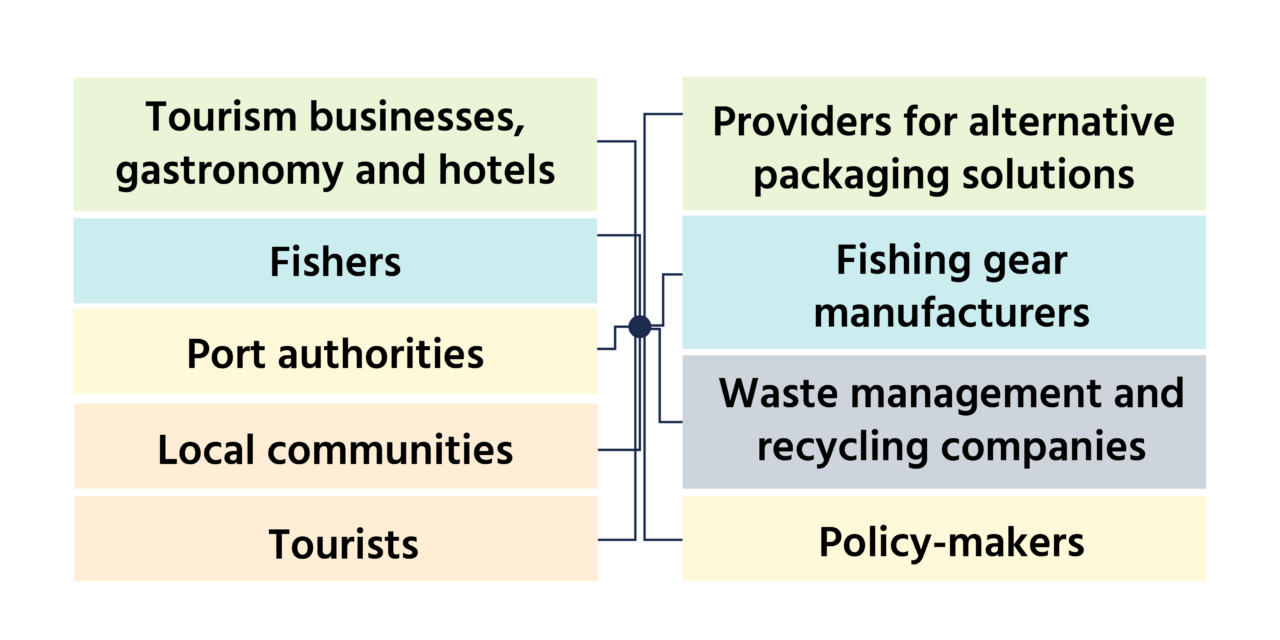
Our key partners
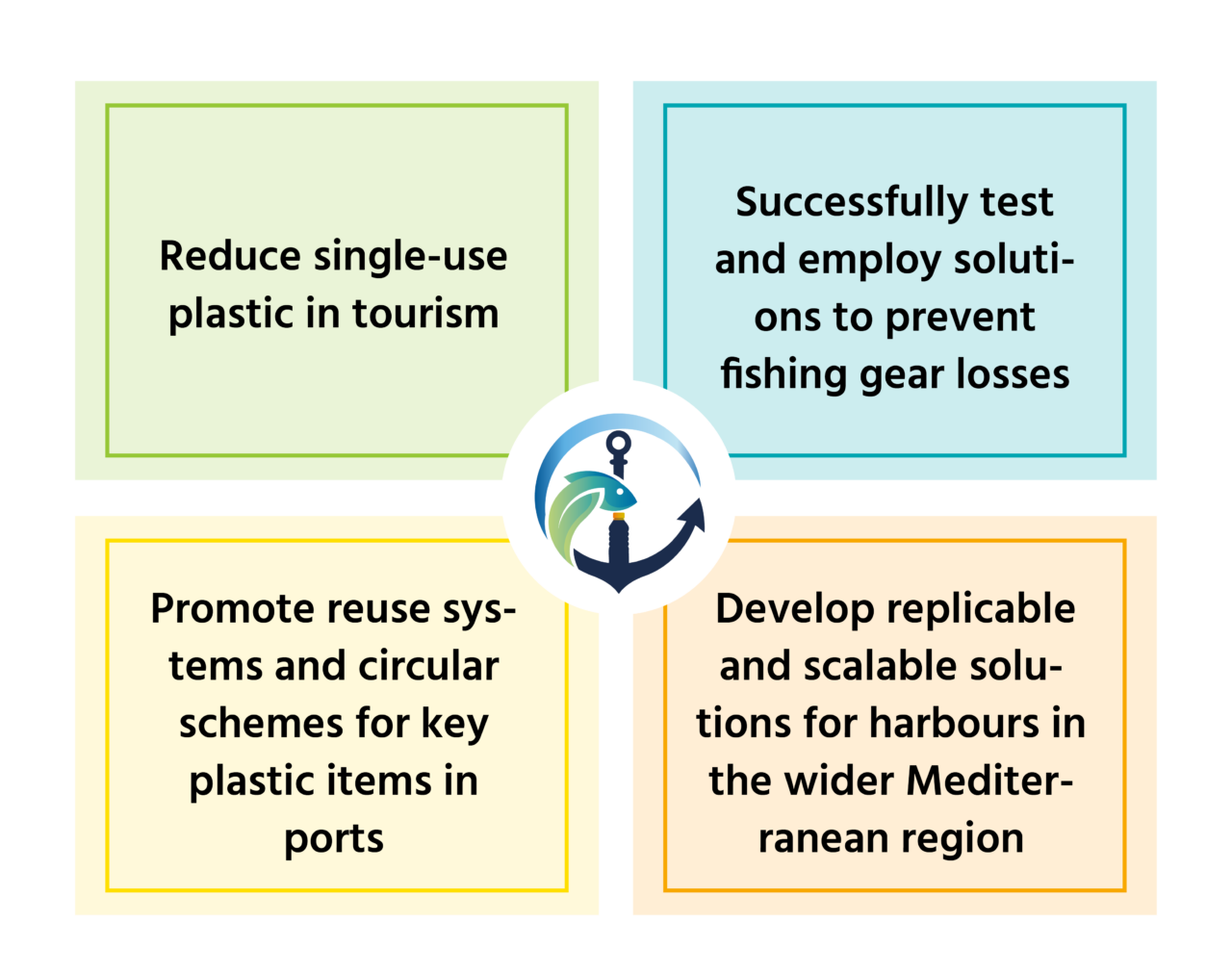
What we aim to achieve by 2028
The way towards creating Plastic Smart Ports is grounded in data. For each pilot port, we are developing tailored waste management schemes, including recommendations for implementation by gastronomy and hotel businesses, as well as guidance on the handling and separation of fishing gear for reuse and recycling. These schemes are based on:
- assessment of plastic litter influx from touristic and fisheries harbours;
- identification of key items leaking into the marine environment;
- analysis of legal requirements and existing legislation;
- workshops for fisheries and gastronomy businesses and staff;
- gender analysis and identification of opportunities for women.
Over the past two decades, ceramics, metal and glass dishes, cups, and cutlery have increasingly been replaced by single-use food containers, not just for take-away orders. Together with municipalities and harbour businesses, we aim to replace single-use plastics and foster circular economy systems by:
- Reuse and refill systems;
- Compostable packaging;
- Trainings for staff and tour guides on reuse systems and waste segregation;
By combining source reduction, circular service models, life-cycle assessments and behaviour change, i.e., “3R and beyond”, port stakeholders can significantly reduce plastic leakage and improve coastal and marine environments. Evidence-based solutions include:
- Reusable and refillable systems: install water and beverage refill stations and replace disposable serviceware (cups, plates, straws, food containers) with durable, reusable alternatives.
- Reuse and service-model innovations: promote reusable service loops, sharing systems and product-as-service models that extend product life and reduce disposables.
- Diverse eco-friendly alternatives: assess and deploy compostable, recyclable and durable material options using life-cycle criteria to avoid unintended impacts.
- Improved waste management and material recovery: standardise on-site segregation, use clear behaviourally tested signage, and streamline collection/processing to maximise capture and minimise leakage.
- Capacity building and institutional uptake: provide targeted training, operational toolkits and incentives for food-service, tourism and vessel operators to accelerate adoption and embed circular practices.
- Behavioural and stakeholder engagement: run evidence-based communication campaigns, use on-site prompts and visitor pledges, and monitor progress to encourage pro-environmental behaviour among residents, tourists and crews.
Fishing gear lost at sea or entering the marine environment from the harbour quayside is one of the most harmful forms of marine litter, threatening marine wildlife and habitats. At the same time, lost gear poses risks for fishers at sea, as well as for divers, swimmers and small vessels.
Together with artisanal fishers, the project strives to reduce the impact of gear loss by:
- Testing new gear marking solutions for recovery;
- Biodegradable netting trials;
- Lost gear search & retrieval;
- End-of-life gear separation for recycling;
- Innovative business opportunities for women.
All measures are supported by targeted communication and awareness-raising actions designed to increase understanding of the Plastic Smart Ports approach among locals and tourists, while also promoting the businesses that commit to more sustainable practices. In the pilot ports, we work directly with artisanal fishers, local operators, visitors, and authorities to foster a culture of responsibility and highlight positive examples of engagement.
At the international level, the Plastic Smart Ports concept will be showcased at relevant international, regional, and global fora—and disseminated, including through WWF’s global Plastic Smart Cities network. These advocacy efforts aim to support policy development, encourage replication in other Mediterranean and global ports, and strengthen the integration of circular-economy principles into port management frameworks.
Three overarching schemes will summarise the experiences from the four pilot Plastic Smart Ports for dissemination and replication nationally as well as internationally in the wider Mediterranean ecoregion and beyond.
Long-term financing scheme: Circular systems require financing. Waste separation and recycling systems are often more costly in comparison to mixed waste landfilling, yet they are both environmentally and economically preferable in the long term. Through a long-term financing scheme, we will assess viable options for implementing the developed solutions, including:
- EPR schemes (e.g., for alternative packaging, fishing gear);
- Return-fee systems for reuse alternatives;
- Revenue generation from recyclable materials.
Recommendations for policy makers: The solutions developed for both the HORECA sector and fisheries will be generalised to support policy adoption and long-term implementation across the Mediterranean region.
Waste management scheme: This scheme will focus on the technical requirements needed to reduce the plastic-waste influx, offering a model that can be adapted to diverse port contexts.